Open Processing Model Release
The community meetings are held online using this link, usually on the first Tuesday of each month at 17:00 CET/CEST. No registration is required to attend. We warmly invite you to propose topics info@e-editiones.org for the forthcoming meetings.
🗓️ 15th September at 17:00 CEST
On 15 September, e-editiones did release the Open Processing Model (OPM) — an open-source Python implementation of the TEI Processing Model, bringing the power of TEI processing directly into popular scholarly workflows.
- Recording: Youtube
Join us for the launch!
- 📅 Date: Tuesday, 15 September 2026
- 🕒 Time: 17:00 CEST
- 📍 Location: Online (Teams)
- 🎟️ No registration required
Join us for a first look at what OPM can bring to the TEI and Digital Humanities community.
We'll demonstrate how to use opm for transforming single documents to HTML, ePub, docx, markdown and PDF via HTML for print or typst. We'll also talk about using it to generate a static website, prepare data to pass it to a static site generator, and how to use pre-rendered content to speed up an existing TEI Publisher app.
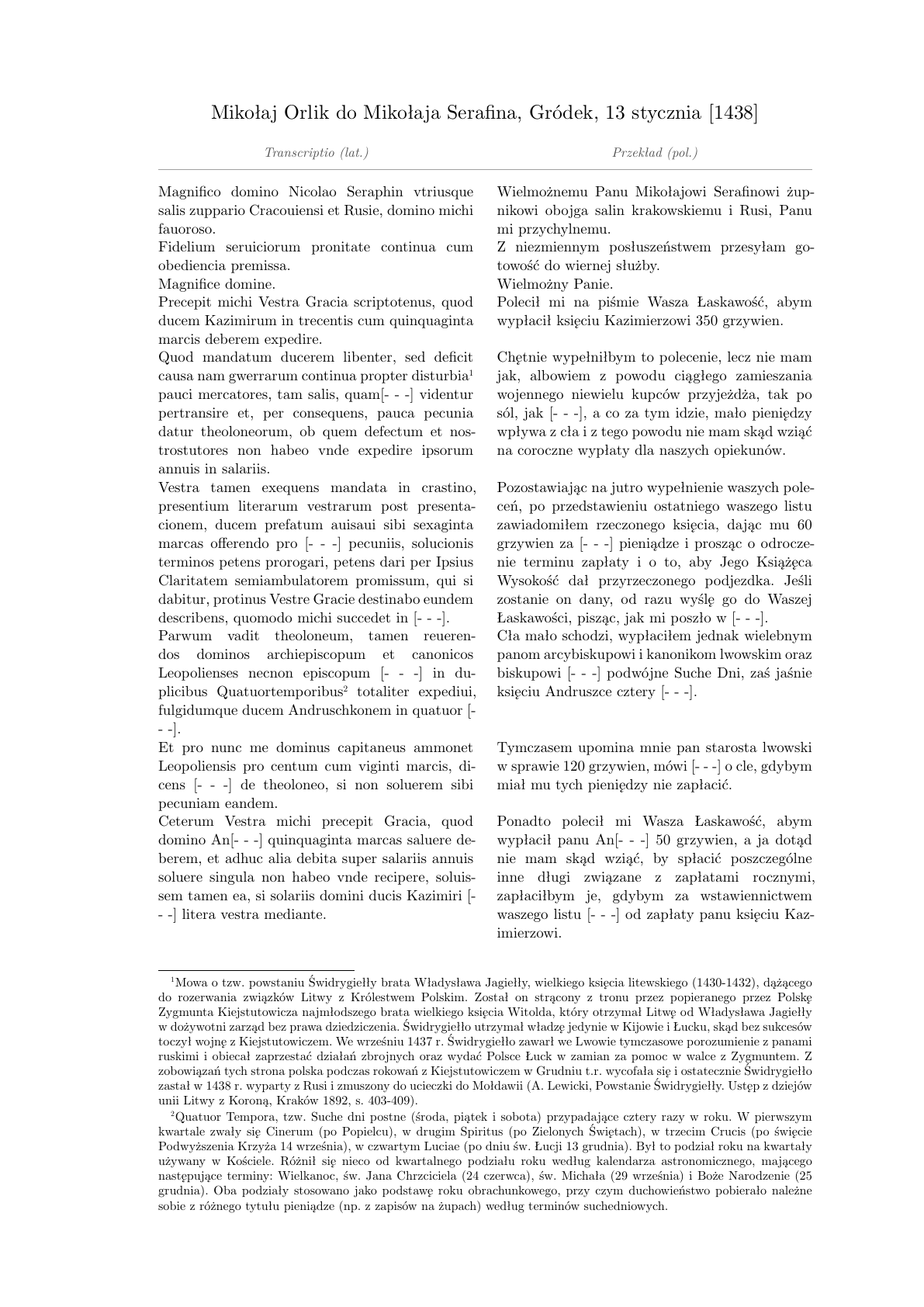
Letter sample (PDF via typst)
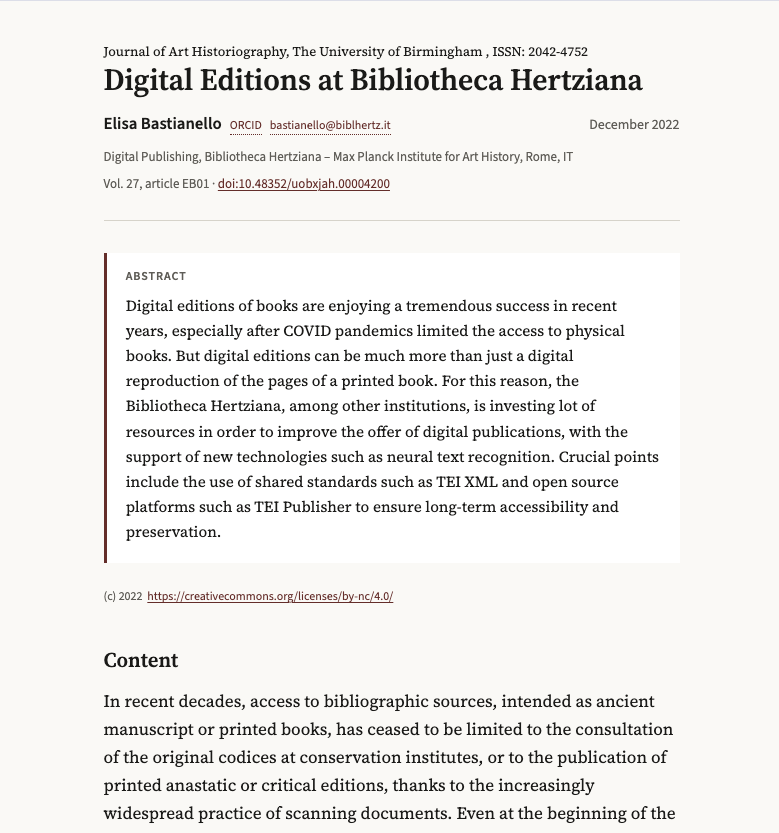
Web preview of journal article
Using JATS XML format
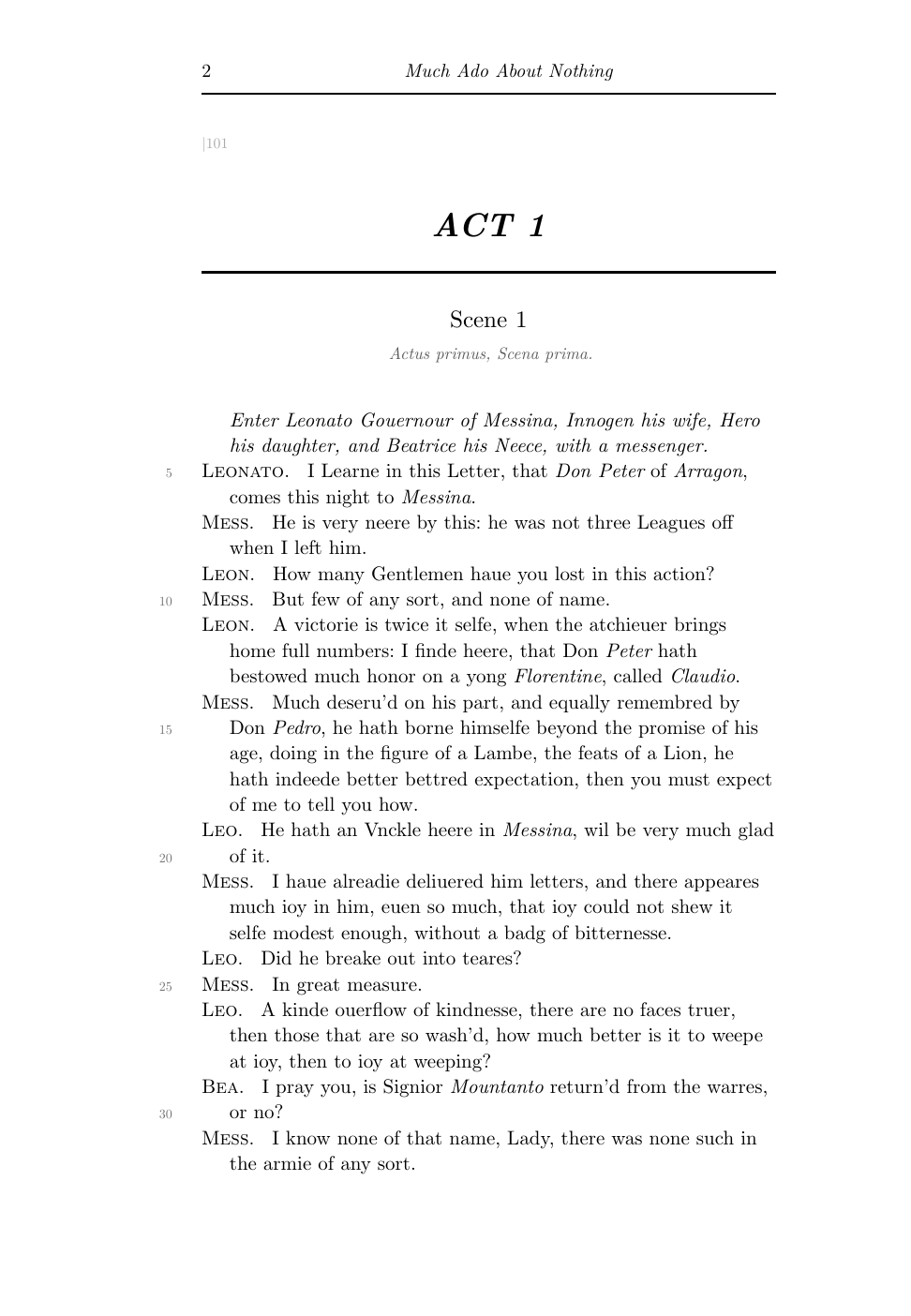
Shakespeare play (PDF via typst)
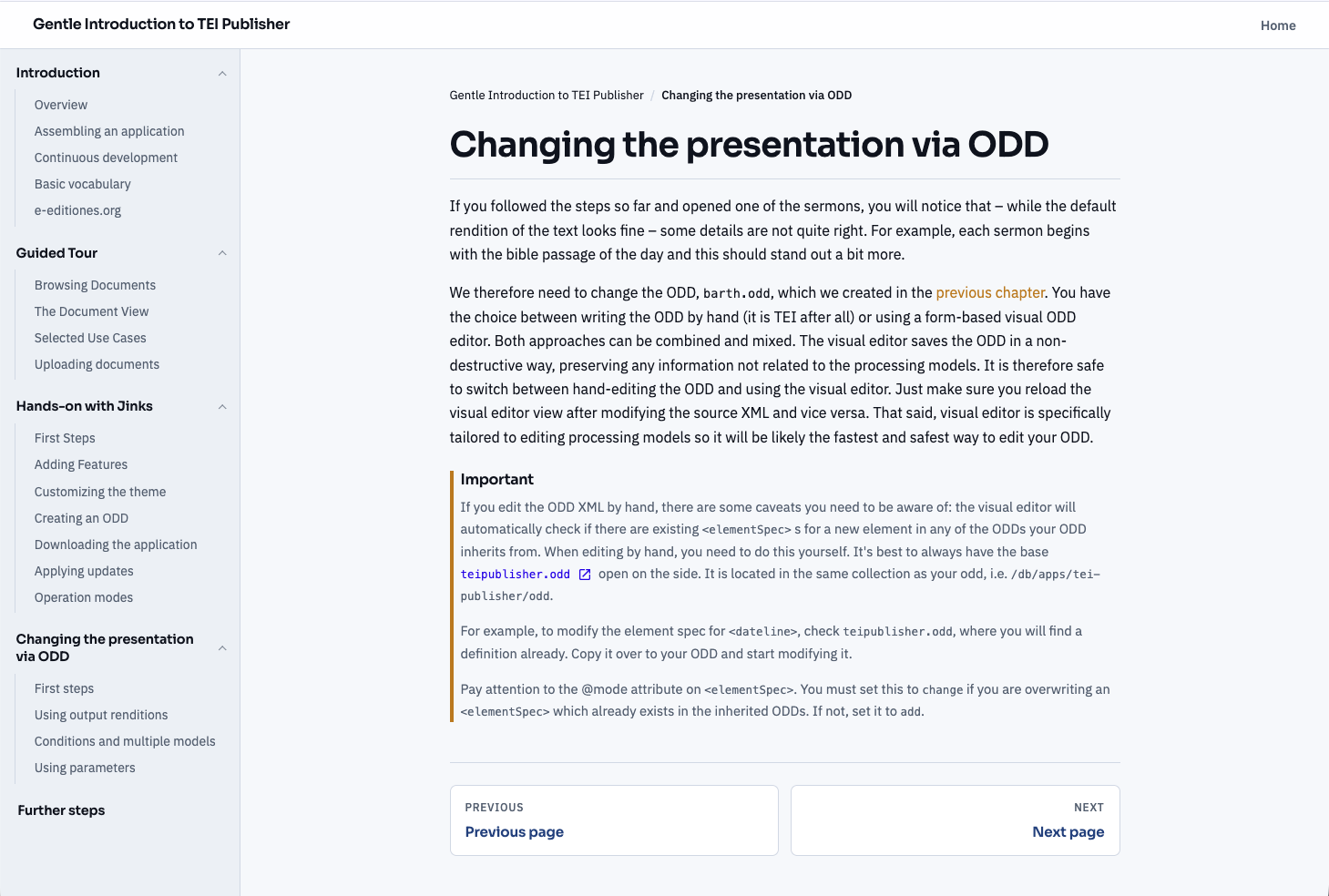
Static web presentation
Plain HTML + CSS produced by OPM
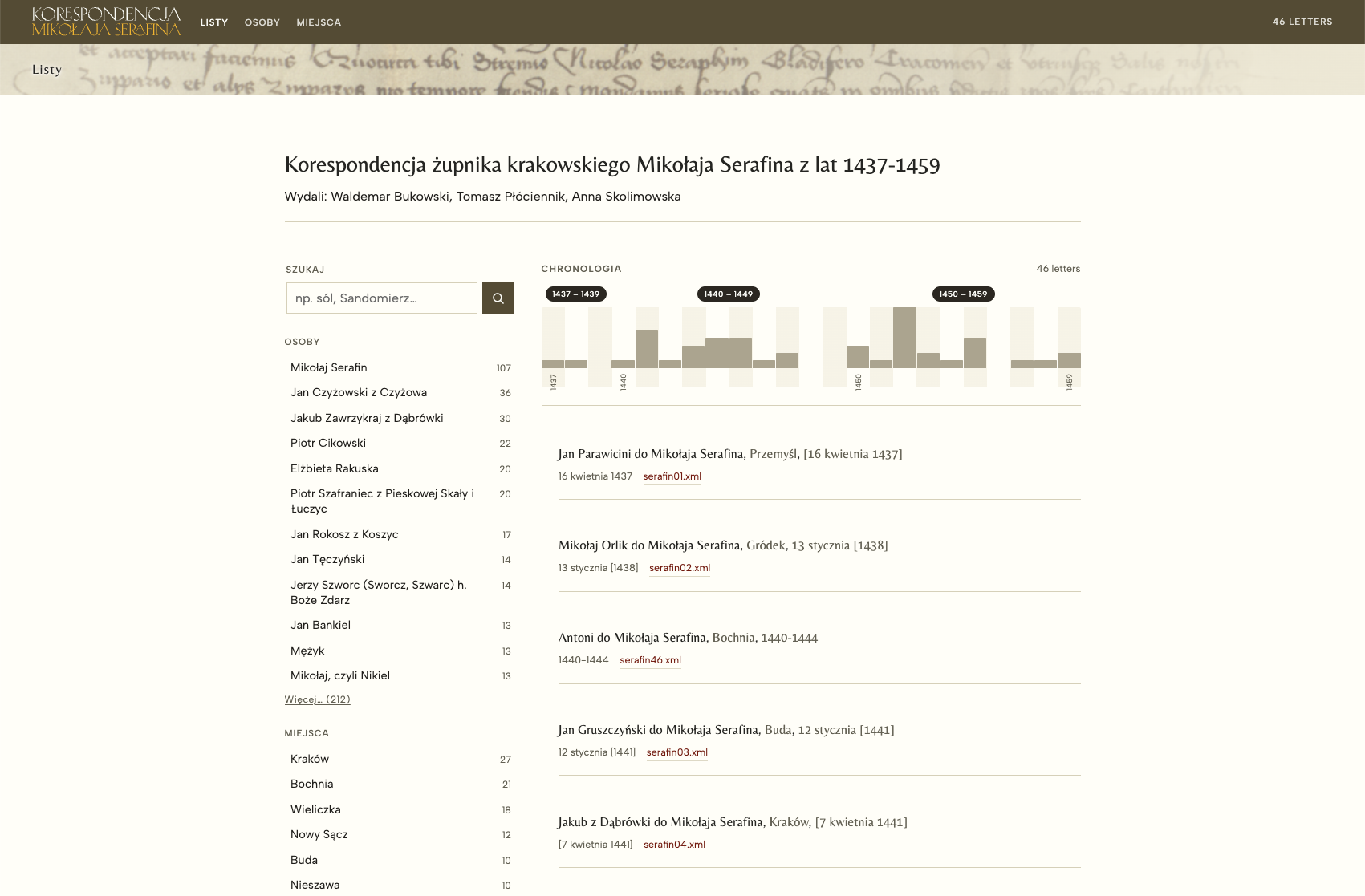
Full static web site
OPM JSON output powering an Astro-based website
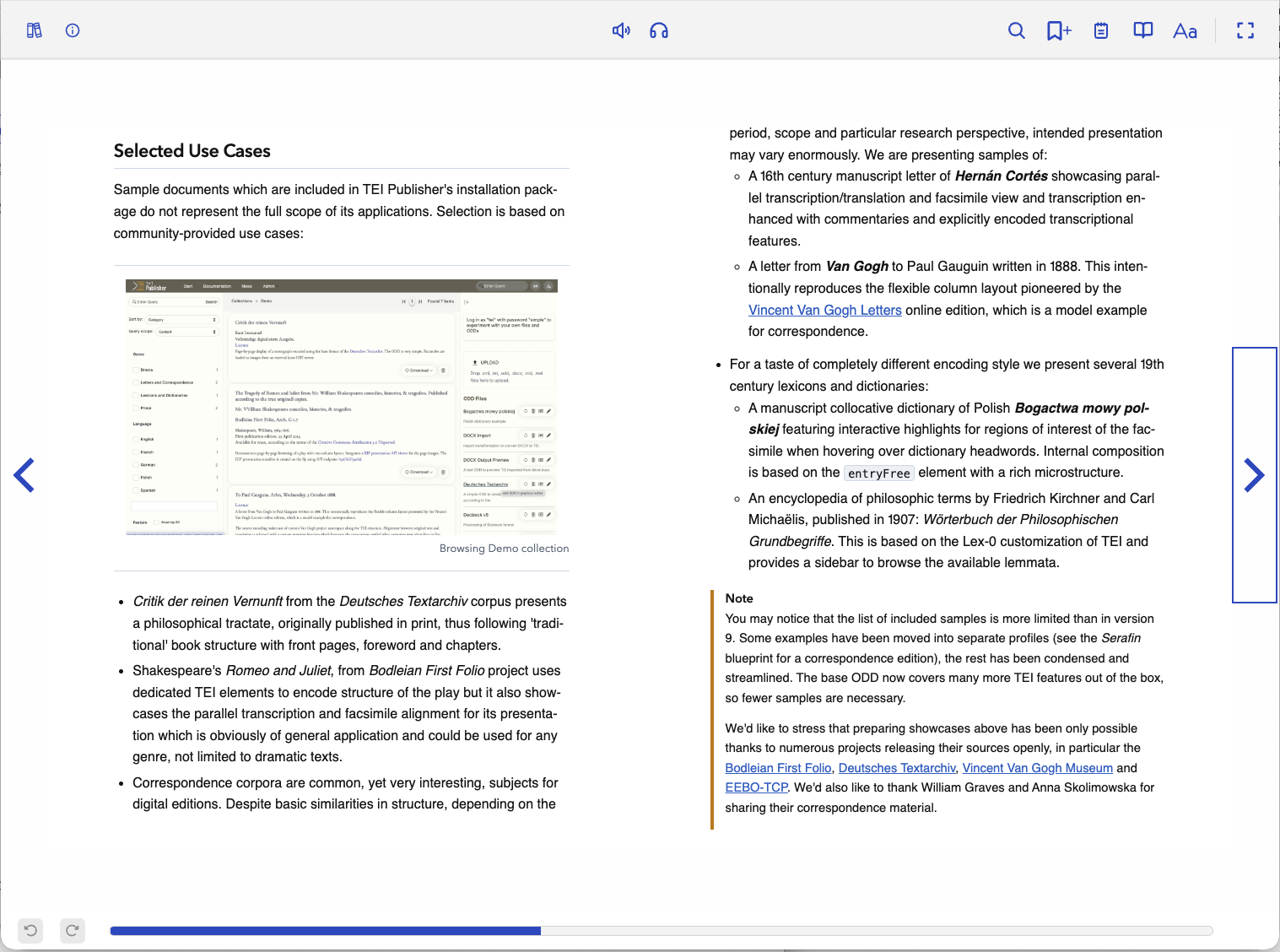
EPUB sample using TEI Publisher documentation
Presentation
For those who could not attend, please find the presentation slides below.
Recording
- Recording: Youtube
Why it matters
The TEI Processing Model is a conceptual cornerstone designed to empower scholars working with XML-encoded material. It is used worldwide to process and publish numerous digital editions and other scholarly resources — online, in print, and in other output formats. Until now, access and adoption have been constrained to users of a particular technology stack based on XQuery and eXist-db. OPM removes these limitations and opens the affordances of the TEI PM to the wider Python ecosystem, making it easier for researchers, developers, and institutions to build on open standards.
📖 Read the full announcement: Open Processing Model 📄 Project prospectus: Read here (PDF)
Support e-editiones
Join e-editiones and follow us on Mastodon, LinkedIn, BlueSky and Instagram for updates.